Melodfy is a lightweight, open-source Python toolkit that converts piano audio into MIDI using AI-powered inference. It focuses on local, transparent processing — no cloud required — so musicians and developers can generate editable MIDI from recordings without sending audio to third-party services.

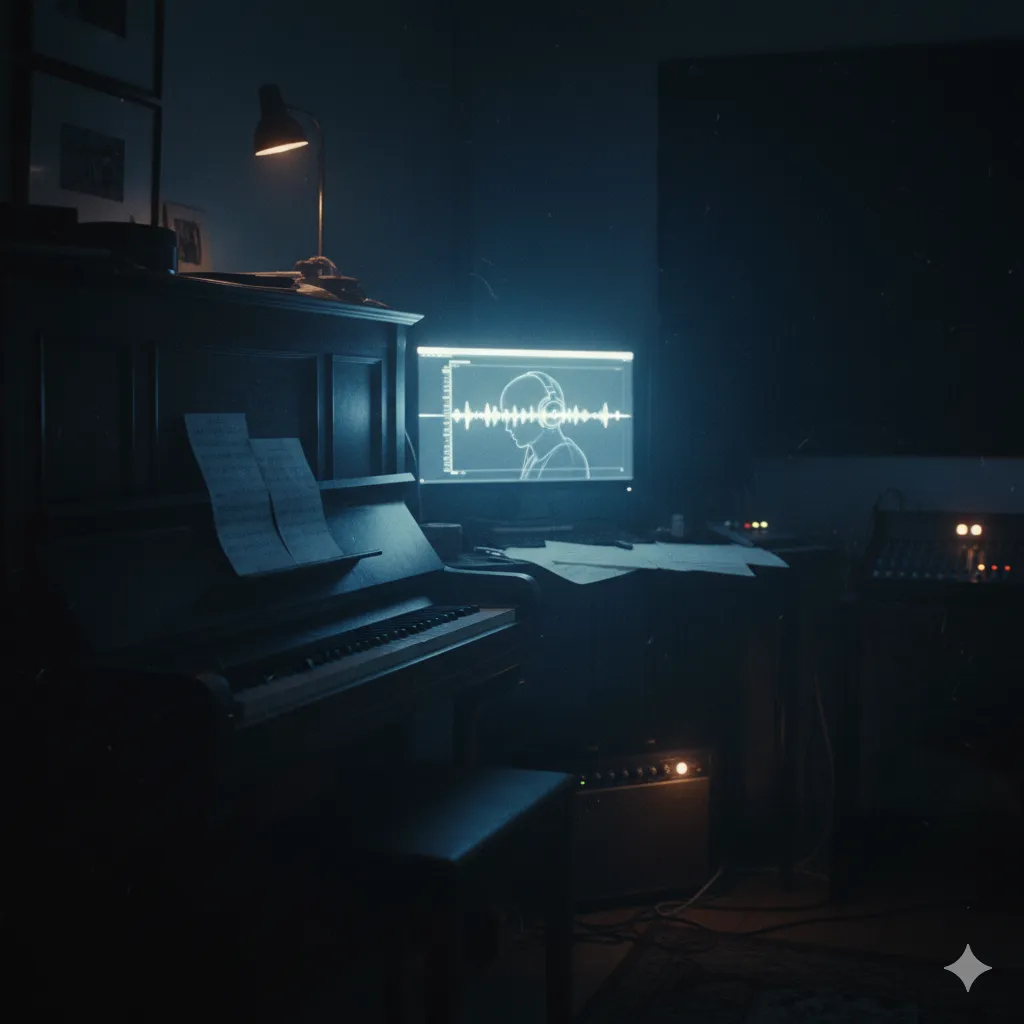
Figure — Project banner used as header art for the article.
The motivation
Many available transcription tools require manual cleanup, expensive licenses, or cloud-based services. Melodfy provides a local alternative that makes experimentation, scripting and learning straightforward.
What makes Melodfy meaningful
Here’s what this tool focuses on — the features that give it purpose beyond a quick utility.
Piano → MIDI conversion
Melodfy uses an AI model (leveraging research-grade approaches) to process an audio file of piano performance and generate a corresponding MIDI file. You press “play”, it listens, and then you get a structured output you can edit or reuse. The GitHub repository shows an inference.py script that loads a model and processes audio.
Local & open workflow
Everything runs locally on Python. No cloud reliance means privacy, offline-capability and full transparency of the model and pipeline. The entire codebase is open-source (MIT license).
Learning & experiment friendly
If you’re a musician who also codes, or a developer curious about audio processing and AI, Melodfy offers a gentle but real entry point. You’ll learn about feature extraction, model inference, audio-to-MIDI pipelines and Python packaging.
Developer-centric packaging
The repo includes a .spec file for packaging, command-line utilities, and documentation of usage patterns.
Behind the scenes: how it works
Here is a high-level glimpse of how Melodfy works (based on code inspection):
- Audio input – You supply a piano recording (likely WAV/MP3) with reasonably clean isolated piano sound.
- Preprocessing – The code extracts features (spectrograms, onset detection etc) from the audio.
- Model inference – A trained AI model processes the features and detects note events (pitch, timing, duration).
- MIDI generation – The code packages detected events into a standard MIDI file format.
- Output – You get a
.midfile you can open in any MIDI editor / DAW, edit further or use for production.
Because it’s local, you can script automation (for example: “take folder of piano recordings → batch convert → load into DAW”).
Why this matters (and who it helps)
- For musicians: Instead of manually transcribing a piano improvisation, you get an automated starting point in MIDI — saving time and helping creativity.
- For developers / learners: This is a concretely useful project that connects audio signal processing, machine learning and practical output.
- For open-source community: It demonstrates how a modest tool can open doors — you can improve the model, adapt to other instruments, or build on it for wider audio-to-MIDI pipelines.
Practical advice & honest limitations
- Quality of input matters: A clean piano recording will yield better results. Overlapping instruments, heavy reverb or large noise will reduce accuracy.
- Model limitations: As a learning-oriented tool, Melodfy may not match commercial transcription services in extremely complex or polyphonic settings. Use it as a starting point, not a polished final system.
- Customization: If you’re comfortable with ML, you could train your own model (adapting to your instrument, environment or sound) — the code base exposes the inference step.
- Usage workflow: For best results, record at decent sample-rate, mono or clean stereo, minimal background noise.
Getting started
- Clone the repo from GitHub.
- Install dependencies (e.g., via
pip install -r requirements.txt). - Prepare a piano audio file.
- Run
python inference.py --model path/to/model.h5 --input path/to/audio.wav --output path/to/output.mid. - Open output in your preferred MIDI editor or DAW.
How you can help / extend
- Improve documentation: add tutorial videos or example datasets.
- Train the model for other instruments (guitar, cello, etc) by adapting the architecture and data pipeline.
- Add GUI or web-interface for non-developers.
- Benchmark and optimize performance (latency, polyphony handling, instrument variation).
Links & sources
- Official GitHub repo: HemantKArya/Melodfy.
- Release page (version history, binaries).
- Topic tag “midi-converter” on GitHub (shows comparable projects).
Final note
Melodfy is more than just code — it’s a bridge between creativity (playing piano) and technology (turning sounds into data). It’s about liberation: letting a musician’s spontaneous moment be captured, translated and re-used in a digital workflow. If you’ve ever thought “I wish I could just record this and it becomes MIDI”, then Melodfy is your “middle-click”.
Thanks for exploring this project with me. If you give it a try, I’d love to hear how it’s worked for you — your feedback and contributions keep the journey growing.
(If it resonates, star the repo and feel free to drop me a message with your experience!)